Eco-conscious Rated Luxury For You and Your Home
Est. 2019
1% For The Planet Member
Eco-conscious Rated Luxury For You and Your Home
Est. 2019
1% For The Planet Member
Eco-conscious Rated Luxury For You and Your Home
Est. 2019
1% For The Planet Member
Eco-conscious Rated Luxury For You and Your Home
Est. 2019
1% For The Planet Member
Eco-conscious Rated Luxury For You and Your Home
Est. 2019
1% For The Planet Member
Eco-conscious Rated Luxury For You and Your Home
Est. 2019
1% For The Planet Member
Eco-conscious Rated Luxury For You and Your Home
Est. 2019
1% For The Planet Member
Eco-conscious Rated Luxury For You and Your Home
Est. 2019
1% For The Planet Member
Eco-conscious Rated Luxury For You and Your Home
Est. 2019
1% For The Planet Member
Eco-conscious Rated Luxury For You and Your Home
Est. 2019
1% For The Planet Member
Eco-conscious Rated Luxury For You and Your Home
Est. 2019
1% For The Planet Member
Eco-conscious Rated Luxury For You and Your Home
Est. 2019
1% For The Planet Member
Eco-conscious Rated Luxury For You and Your Home
Est. 2019
1% For The Planet Member
Eco-conscious Rated Luxury For You and Your Home
Est. 2019
1% For The Planet Member
Eco-conscious Rated Luxury For You and Your Home
Est. 2019
1% For The Planet Member
Since 2019 Ateliers Verts® has supported Good Causes across the Land, Ocean, Air, People and Animals. After all, they're all interconnected.
With so much noise in the media about vile human behaviour it's good to be reminded of the good work being done by various organisations. Being eco-conscious, sustainable, eco-friendly, planet-friendly or whatever you want to call it will help humanity to survive and reverse the damage we have done to the planet. So positive initiatives which raise awareness and garner support are welcome!
Here are our Top 10 Eco-Conscious Days for the Month of December 2026:
Modern slavery is not defined in law, it is used as an umbrella term covering practices such as forced labour, debt bondage, forced marriage, and human trafficking. Essentially, it refers to situations of exploitation that a person cannot refuse or leave because of threats, violence, coercion, deception, and/or abuse of power.
Adopted by the United Nations General Assembly on 13 December 2006, the Convention established a comprehensive framework for protecting and promoting the rights of persons with disabilities, recognising their full and equal participation in all aspects of society.
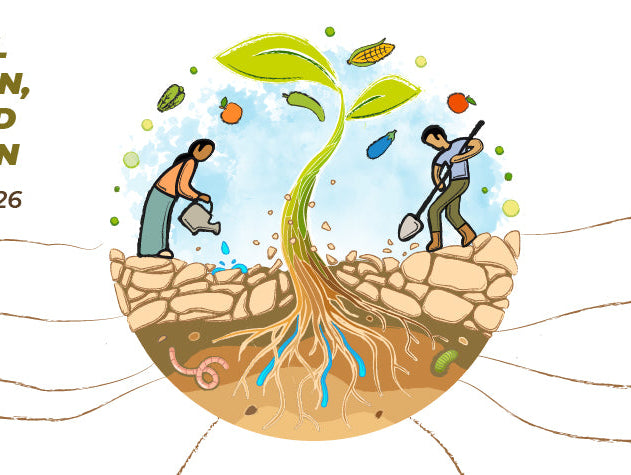
We celebrate World Soil Day (WSD) annually on 5 December to raise global awareness about the role soils play in agricultural development, ecosystem functions and food security.
Endorsed by the Food and Agriculture Organization of the United Nations (FAO) and the United Nations (UN) General Assembly, WSD became an official international day in 2014. Since then, FAO has facilitated the implementation of WSD as a global platform for action and advocacy within the framework of the Global Soil Partnership (GSP)
More: World Soil Day
Corruption undermines democratic institutions, slows economic development and contributes to governmental instability.
On 31 October 2003, the General Assembly adopted the United Nations Convention against Corruption and requested that the Secretary-General designate the United Nations Office on Drugs and Crime (UNODC) as the secretariat for the Convention’s Conference of States Parties. 193 parties have committed to the Convention’s anti-corruption obligations, showing near-universal recognition of the importance of good governance, accountability, and political commitment.
The International Anti-Corruption Day 2026-2027 campaign calls on governments and partners to stand #UnitedAgainstCorruption by connecting the dots between corruption and the crimes it enables and to follow the money to deliver justice.
The campaign highlights the need to strengthen financial integrity and accountability, enhance international cooperation and equip governments with the tools and knowledge to prevent corruption, trace illicit financial flows and reduce the opportunities that criminal networks exploit. Addressing corruption is one of the most effective ways to disrupt organised crime, protect public resources, reinforce the rule of law and support peace, security and sustainable development.
Human Rights Day commemorates the anniversary of one of the world's most groundbreaking global pledges: the Universal Declaration of Human Rights (UDHR). This landmark document enshrines the inalienable rights that everyone is entitled to as a human being - regardless of race, colour, religion, sex, language, political or other opinion, national or social origin, property, birth or other status.
The Declaration was proclaimed by the United Nations General Assembly in Paris on 10 December 1948 and sets out, for the first time, fundamental human rights to be universally protected.
As a “common standard of achievement for all peoples and all nations”, the UDHR is a global blueprint for international, national, and local laws and policies and a bedrock of the 2030 Agenda for sustainable development.
It is available in 578 languages, from Abkhaz to Zulu, making the UDHR the most translated document in the world.
More: Human Rights Day
The United Nations General Assembly designated 11 December “International Mountain Day”. As of 2003, it has been observed every year to create awareness about the importance of mountains to life, to highlight the opportunities and constraints in mountain development and to build alliances that will bring positive change to mountain peoples and environments around the world.
The Food and Agriculture Organisation of the United Nations (FAO) is the coordinating agency for the preparation and animation of this celebration and is mandated to lead the observance of it at the global level. The Mountain Partnership Secretariat in the FAO Forestry Division is responsible for coordinating this international process.
International Mountain Day 2026 celebrates the role of mountain pastoralists who, through their knowledge, mobility and care, raise animals, contribute to food security and steward fragile mountain rangelands.Drawing on Indigenous and local knowledge developed over generations, their practices help regenerate vegetation, maintain healthy soils, water cycles and wildlife habitats, and respond to climate variability – while supporting rural mountain economies and preserving ecosystems.
"International Migrants Day gives us a special opportunity to shine a spotlight on the invaluable contributions of millions of migrants around the world. It's also a day for us to highlight the increasingly complex environment in which migration occurs. Conflicts, climate-related disasters and economic pressures continue to drive millions of people from their homes in search of safety or simply opportunity.
This past year, we saw record levels of internal displacement, rising humanitarian needs across ongoing and new crises, and, tragically, the highest-ever death toll of migrants in transit. Yet, alongside these challenges, are stories of resilience, progress and hope. Where safe and well-managed migration holds extraordinary potential. Migrants play critical roles in labour markets, filling skills gaps, driving innovation and entrepreneurship, and addressing demographic challenges in aging societies. Migrants boost economic growth and provide a lifeline to families and communities back home, driving development.
The evidence is overwhelming that when migration is managed safely and strategically, it can be a powerful force for good. By supporting regular pathways for migration, we can enable opportunities for migrants, better protect their rights, and contribute to greater prosperity in the countries migrants come from and those that host them.
Together, one step at a time, we can continue building a world where migration is safe, orderly, and beneficial – for everyone."
To raise awareness about meditation and its benefits, the General Assembly proclaimed 21 December as World Meditation Day, recalling the right of everyone to the enjoyment of the highest attainable standard of physical and mental health.
The origins of Christmas Day can be traced back to ancient times, when many cultures all over the world celebrated various winter festivals and religious holidays. In particular, the ancient Romans celebrated Saturnalia, a winter festival that honored the agricultural god Saturn and included gift-giving, feasting, and other revelries.
The celebration of Christmas as we know it today, however, has its roots in the Christian tradition. According to the Christian Bible, Jesus was born in Bethlehem, a town in ancient Judea, to the Virgin Mary and her husband Joseph. The exact date of Jesus’ birth is not known, but it is believed to have occurred sometime around the year 4 BC.
Over the centuries, various Christian traditions and customs have developed around Christmas celebrations. In the modern world, Christmas is celebrated by people of many different faith traditions and is widely recognised as a time of joy, celebration, and goodwill towards others.
More: Christmas Day
A time for people to come together and celebrate the end of the year and the beginning of a new one, New Year’s Eve is a holiday that is celebrated on the last day of the year — the eve of New Year's Day. Attending events, dancing, and watching fireworks are common New Year’s Eve celebrations.
Some people also make resolutions for the new year, which are promises to themselves to make more changes in their lives for the better. It’s a time of joy, hope, and reflection, and is often marked by traditions and customs that vary from culture to culture.
The celebration of New Year’s Eve has a history dating back thousands of years. The holiday’s origins can be traced back to ancient civilizations, such as the Babylonians and the Romans, who marked the beginning of the new year with religious festivals and celebrations.
In ancient Rome, new year celebrations occurred on the first full moon in March with the festival of Anna Perenna – the goddess of the year. The festival was a time of feasting and drinking, and people would exchange gifts and make wishes for the new year.
In medieval Europe, the new year was celebrated on March 25th, which was the Feast of the Annunciation. This date marked the start of the new year on the Julian calendar, which was used at the time. The celebration of the new year on this date persisted until the adoption of the Gregorian calendar in the 16th century, which moved the start of the new year to January 1st.
New Year’s Eve as it is celebrated today is largely a modern creation, with many of the traditions associated with the holiday having developed in the 20th century. Despite this, new year celebrations have a rich and varied history that spans many centuries and cultures.
More: New Year's Eve

Header Image: World Soil Day courtesy of FAO.org
#MinimiseOurHumanFootprint
©Ateliers Verts Ltd. 2026
Back to: Ateliers Verts® The Magazine
Beautiful discoveries. Better choices.
Join our Edit for the latest considered finds, exclusive offers, beautiful gifts and inspiration for you and your home.
Your inbox, considered. Unsubscribe anytime.